Why I make this
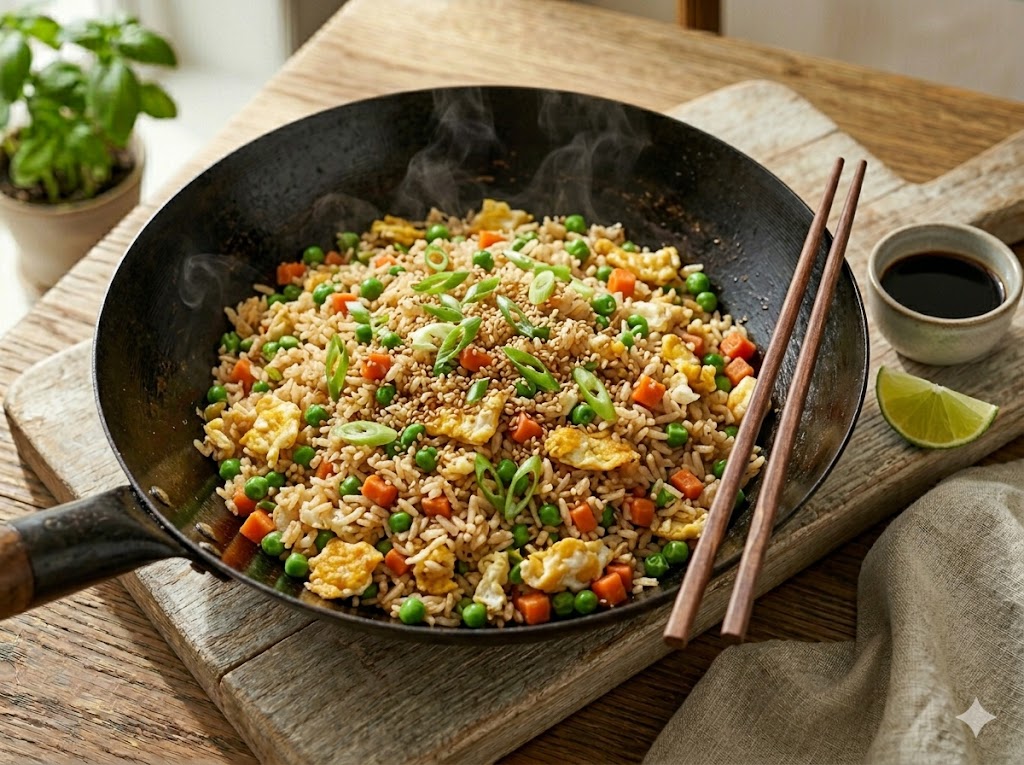
This is the recipe I cook the day after I cook another rice recipe. The leftover-rice plan is the whole point: I always make a cup more rice than I need on Monday, spread it on a tray to cool, and refrigerate it covered. Tuesday's dinner is fried rice in fifteen minutes. The same trick works after I've made the lemon chicken skillet, the curry, or just a plain pot of rice for whatever.
The reason cold rice is non-negotiable: hot rice (or even warm rice straight off the stove) is full of moisture that hasn't had time to evaporate. Drop it in a hot pan and the moisture turns to steam, the grains stick together, and you've made gummy rice porridge instead of fried rice. Cold rice, especially day-old, has dried out a little — the grains separate, fry, and develop those toasted edges that are the whole point.
The other thing: eggs cook in 90 seconds, rice takes longer. If you cook them in the same pan together, the eggs are tough and the rice is undercooked. Take the eggs out as soon as they're soft, then bring them back at the end.
The recipe
Ingredients
- 3 cups cooked rice, cold from the fridge (day-old works best, fresh-cold-on-a-tray works too)
- 3 large eggs, beaten with a pinch of salt
- 2 tbsp neutral oil (avocado, vegetable, peanut), divided
- 2 garlic cloves, minced
- 1 tsp grated fresh ginger
- 1 cup frozen peas and carrots, thawed (or any frozen mixed veg)
- 3 scallions, white and green parts separated, both thinly sliced
- 2 tbsp low-sodium soy sauce
- 2 tsp toasted sesame oil
- 1/2 tsp white pepper (or black)
- Optional but excellent: 1 tsp chili crisp, sesame seeds, a wedge of lime
Method
- Cook the eggs first, alone. Heat 1/2 tablespoon of the oil in a large nonstick skillet or a wok over medium. Pour in the beaten eggs. Let them sit for 30 seconds, then push the cooked edges toward the centre and tilt to let the raw bits flow out. Stop while the eggs are still glossy and slightly underdone — they'll finish cooking when they go back in. Slide onto a plate. Use the back of a spoon to break them into rough pieces.
- Aromatics. Wipe the pan with a paper towel. Raise the heat to medium-high. Add the remaining 1.5 tablespoons of oil. Once it shimmers, add the scallion whites, garlic, and ginger. Stir for 45 seconds — not longer, garlic burns fast at this heat.
- Rice goes in cold. Add the cold rice. Press it flat against the pan with the back of your spatula. Now leave it alone for 90 seconds. You're letting the bottom layer toast. Then start stir-frying, breaking up any remaining clumps with the spatula, for about 4 minutes total. The rice will start to look glossy and you'll hear it crackle. Listen for the crackle — that's the sound of fried rice happening.
- Vegetables. Push the rice to the edges. Drop the peas and carrots in the centre, stir for 30 seconds, then mix everything together for another 60 seconds.
- Eggs back, sauce, finish. Add the broken-up eggs back to the pan. Drizzle the soy sauce and the sesame oil around the edges of the pan (not on top of the rice; the edges hit the hot pan first and concentrate). Add the white pepper. Toss everything for 30 seconds.
- Off the heat. Sprinkle the scallion greens over the top. Spoon into bowls. Chili crisp, sesame seeds, lime — all optional, all great.
Melissa's kitchen note
The fastest way to "age" rice if you don't have day-old in the fridge: cook the rice, spread it in a thin layer on a sheet pan, refrigerate uncovered for 30-45 minutes. The cold air and the spreading drop the moisture down enough to fry. Not as good as overnight, but close.
About the soy sauce around the edges: this is a small thing that took me years to learn. Pouring soy sauce directly onto rice mostly soaks one section and leaves the rest pale and bland. Drizzling it where the pan is hottest lets it sizzle and caramelise slightly before it touches the rice, which gives a more even seasoning and a touch of toastiness. Same trick works for fish sauce, oyster sauce, and rice vinegar in any stir-fry.
Ingredient notes
- Cold rice — jasmine, long-grain white, basmati all work. Brown rice works but the texture is chewier. Avoid sticky/sushi rice for this dish; it clumps too much. Avoid risotto rice; same problem.
- Eggs — large eggs, fresh. Beat them with a pinch of salt; the salt slightly tenderises them.
- Frozen peas and carrots — this is one of the few times I prefer frozen to fresh. The cubes are pre-sized, they're already blanched, and they cook in seconds. Thaw under warm water for 30 seconds before using; pat dry. Wet vegetables make the rice soggy.
- Scallions — the whites and greens have different jobs. Whites go in early to flavour the oil; greens go on top fresh at the end.
- Soy sauce — low-sodium. Regular soy will easily over-salt the dish. Tamari for gluten-free.
- Sesame oil — toasted (dark amber colour), not the pale "sesame oil" sold in some grocery stores for high-heat cooking. The toasted kind is for finishing, never for frying. 2 teaspoons is plenty.
- Chili crisp — Lao Gan Ma is the classic. Fly By Jing is excellent and slightly fancier. Both are worth keeping in the fridge.
Substitutions I've tested
- Add protein. Diced cooked chicken, leftover rotisserie chicken, shrimp (add raw with the rice, takes 3 min to cook), or cubed firm tofu (pan-fry separately first, add at the end with the eggs).
- Vegan. Skip the eggs. Add 1 cup of pan-fried diced firm tofu in their place.
- Different vegetables. Diced bell pepper (add at step 4), thinly sliced cabbage (add at step 4 with peas), corn kernels (frozen or fresh), edamame, baby bok choy quartered. Avoid watery vegetables like tomatoes or zucchini — they wreck the texture.
- Fancy version. Add 1/2 tsp Chinese five-spice with the white pepper. Stir 1 tsp shaoxing wine into the rice in step 3.
- No rice cooker? 1 cup uncooked rice + 1.5 cups water in a saucepan, bring to a boil, lower to a simmer, cover, 18 minutes, off heat 5 more minutes. That gives you 3 cups cooked. Spread on a tray, cool, refrigerate.
Storage and reheating
Cooked fried rice keeps in the fridge for 3-4 days. Reheat in a hot skillet with a tiny splash of water to revive the texture — the microwave works in a pinch but doesn't bring back the fried-rice crackle.
Important food-safety note: cooked rice can grow bacteria fast at room temperature. Don't leave fried rice (or any cooked rice) at room temp for more than two hours. Cool it quickly by spreading it on a tray, then refrigerate.
Don't freeze. The eggs go rubbery and the rice gets watery on thaw.
FAQ
I don't have leftover rice. Now what?
Cook 1 cup of rice now. Spread it as thinly as possible on a sheet pan. Refrigerate uncovered for 30-45 minutes. It won't be as good as overnight, but it'll fry properly. Skip this and you'll have rice porridge.
Why does my fried rice taste bland?
Almost always: not enough heat. Wok-style stir-fry needs the pan hot enough that the rice crackles when it hits. If you're using an electric stove that takes forever to recover heat after each addition, work in two smaller batches.
Can I make fried rice with brown rice?
Yes. Texture is chewier and the flavour is nuttier. Use the same proportions; the only thing that changes is the rice itself.
Why did my eggs come out rubbery?
You either left them in the pan too long when cooking them solo (pull at glossy and slightly under), or you added them back too early when the rice was still being stir-fried over high heat. They go in at the very end and only need 30 seconds to warm through.