Why I make this
This is what I cook when I get home at six and realize I never figured out dinner. Salmon takes seven minutes total. The grain has been cooked or comes from a leftover pot. The bowl is built in three seconds. The garlic butter, made in the empty pan after the fish comes out, is the difference between "fine I guess" and "wait, what is this?" It's three ingredients and 90 seconds of work.
The two things I learned the hard way are unrelated. First: a wet salmon fillet will not crisp. It will steam, the skin will stick to the pan, and you will spend the dinner sad. Pat it dry on all six sides with paper towels and salt it before it goes in — salt also draws moisture out of the surface. Second: garlic in the pan with the salmon turns black and bitter in the time it takes the fish to cook through. The butter and garlic go in after the salmon comes out, off the heat, in the residual warmth.
The recipe
Ingredients
- 4 (5 oz / 140 g) salmon fillets, skin on, equal thickness
- 3/4 tsp kosher salt, divided
- 1/4 tsp black pepper
- 1 tbsp neutral oil (avocado or grapeseed)
- 3 tbsp unsalted butter
- 3 garlic cloves, finely minced
- 1 tsp lemon zest
- 1 tbsp lemon juice
- 2 tsp soy sauce or tamari
- 2 cups cooked rice or quinoa, warm
- 1 cucumber, diced
- 1 cup grated carrot
- 2 tbsp chopped dill or parsley
- Sesame seeds, optional
Method
- Dry the salmon obsessively. This is the most important step. Pat the top, the sides, and especially the skin with paper towels. Then pat again. Sprinkle 1/2 teaspoon salt across the four fillets and the pepper across the flesh side. Let them sit for 5 minutes (more drying happens automatically).
- Sear skin-side down. Heat the oil in a nonstick skillet over medium-high until it shimmers. Place the salmon skin-side down. Use the back of your spatula to press gently for the first 10 seconds — salmon skin curls when it hits heat, and a 10-second press keeps it flat. Then leave it. Don't move it. 5 minutes.
- Flip and finish. The skin should release on its own when ready. If it sticks, give it 30 more seconds. Flip carefully — thin metal spatula slides under it. Cook flesh-side 2 minutes for medium-rare, 3 minutes for medium, 4 minutes for cooked-through. Move salmon to a plate, skin facing up.
- Make the garlic butter in the empty pan. Lower the heat to medium-low. Add the butter. Once it foams (about 30 seconds), add the garlic and stir. As soon as the garlic smells fragrant (not browned), about 30 seconds, pull the pan off the heat completely.
- Off-heat finish. Stir in the lemon zest, lemon juice, and soy sauce. The pan will sizzle a little. Add the remaining 1/4 teaspoon salt only if needed (taste first — soy sauce is salty).
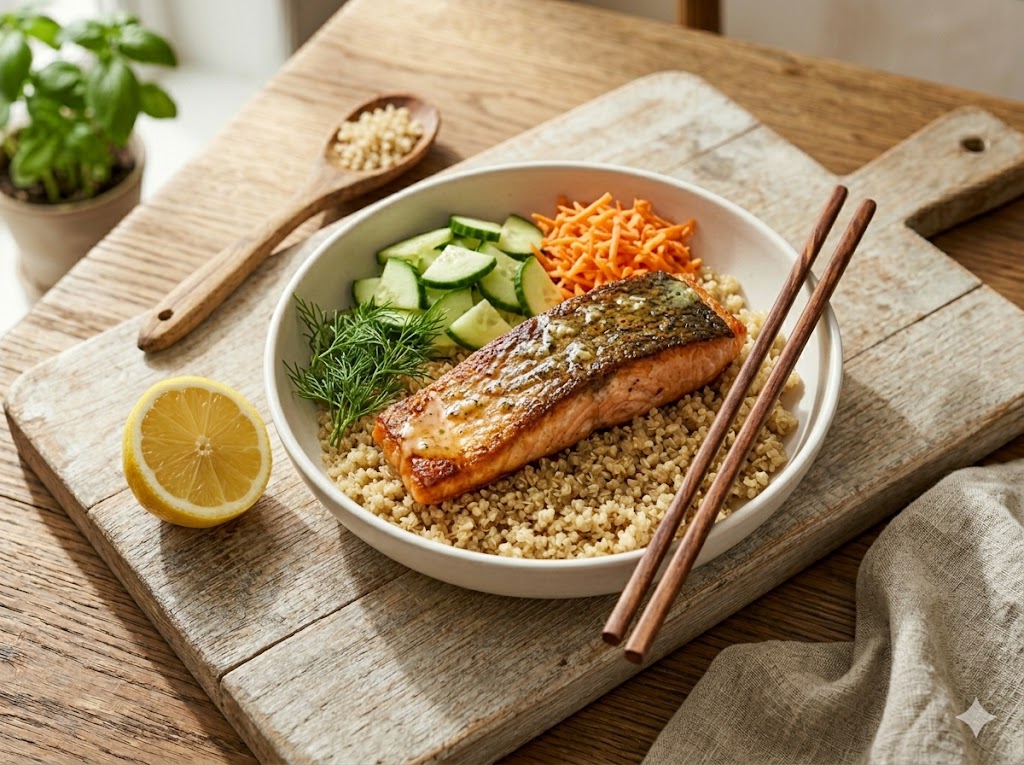
- Build bowls. Warm grain in the bottom, cucumber and carrot at the edges, salmon on top, and spoon the garlic butter over the salmon (it'll run into the grain — this is good). Herbs, sesame seeds. Eat.
Melissa's kitchen note
Salmon doneness is mostly about the thickness of the fillet, not the time on the clock. A 1-inch thick fillet at the centre is medium after 5 minutes skin-down + 2.5 minutes flesh-up. A 1.5-inch thick fillet takes longer; a half-inch tail piece takes less. The honest test: press the centre of the fillet gently. If it flakes apart easily and the colour just-barely changes from translucent to opaque, that's medium. If you can still see deeper red in the middle, give it 60 more seconds.
I use a thin metal fish spatula, not a plastic one. The flexible thin edge slides under the skin without ripping it. If you cook salmon often, this is a $12 tool that pays for itself in the first month.
Ingredient notes
- Salmon — skin-on is best for this technique. The skin renders and crisps and protects the flesh from the hot pan. Skinless works but cook flesh-side first for 4 minutes, then 2 on the back, and you skip the press step.
- Cooked grain — this recipe is a great way to use leftover rice. Brown rice, white rice, quinoa, farro, barley all work. Avoid sticky sushi rice; it clumps in the bowl.
- Soy sauce — tamari for gluten-free. The 2 tsp is doing a lot — it brings the salt, the umami, and a little caramel from the soy aging. Don't substitute table salt for it.
- Lemon — both zest and juice. Zest carries the aroma; juice carries the acid. They aren't interchangeable.
- Cucumber and carrot — the cold crunch is what makes the bowl feel like a meal rather than just fish-on-rice. Don't skip them. Radishes work, sliced cabbage works, snap peas work.
Substitutions I've tested
- No fish? Same method works on a thick boneless skinless chicken thigh (8 minutes per side over medium) or on firm tofu (press first, sear in oil 4 minutes per side).
- Dairy-free. Use a good olive oil instead of butter. The garlic-oil version is excellent and tastes more Italian than Asian.
- Soy-free. Coconut aminos work in place of soy. Slightly sweeter; cut the sweetness with an extra splash of lemon.
- Make it spicy. Add a pinch of red pepper flakes to the butter with the garlic. Or a teaspoon of gochujang stirred in at the end.
- Frozen salmon. Thaw fully overnight in the fridge, then pat extra dry. Frozen-then-thawed salmon releases more water; you may need to dry twice.
Storage and reheating
Salmon is at its best the day you cook it. The bowls do work for next-day lunch, with one rule: store the salmon, the grain, and the vegetables separately. Refrigerate up to 2 days.
Reheating salmon in the microwave is fine but smells. The better option: 10-15 seconds in the microwave just to take the chill off, then eat it on top of warm rice. The remaining heat from the rice finishes warming the fish. Don't blast it.
Cold salmon flaked over a salad with the garlic butter (gently warmed and drizzled) is a legitimately great lunch.
Don't freeze cooked salmon. It goes dry and stringy.
FAQ
My salmon stuck to the pan. Help.
Three possible causes. The pan wasn't hot enough when the salmon went in (you should hear an immediate sizzle). The salmon wasn't dry enough. Or you tried to flip it before the skin was ready — if the skin is properly crisped, it releases on its own. Wait 30 more seconds and try again.
I have no idea if it's done.
Two reliable tests. First, press the thickest part with your finger. Medium feels firm but yielding, like the heel of your palm. Second, slide a small knife into the centre and look. Translucent and shiny means under; opaque and flaky means done; dry and pale means over.
Can I use frozen pre-portioned salmon?
Yes. Thaw it completely overnight in the fridge in its package, then unwrap and pat very dry. Frozen-then-thawed fish needs more drying than fresh.
What if I don't have lemon?
Lime works, with about 2/3 the amount (lime is more acidic). Vinegar (rice or white wine) at half the amount also works but has no aroma; you lose something.