Why I make this
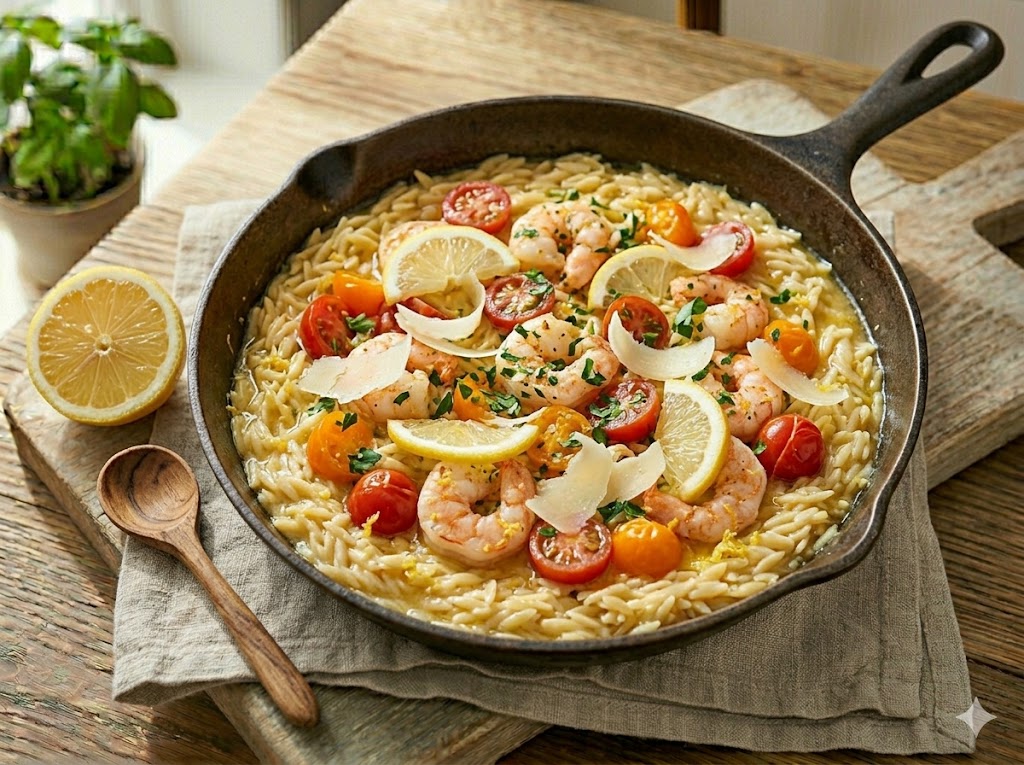
This is the recipe I cook when I want dinner to feel like a special occasion without spending an hour at the stove. Orzo cooks in the time it takes shrimp to defrost. The broth becomes a sauce. The shrimp gets brief contact with high heat — just enough for the outside to brown and the inside to stay tender. Total time twenty-eight minutes, total dishes one skillet.
The non-obvious move is searing the shrimp first and removing it. If you cook the shrimp with the orzo, you have a thirteen-minute simmer of overcooked rubber-shrimp. By searing for one minute per side and pulling them out, the shrimp finishes cooking in the residual heat at the end — tender, slightly springy, exactly right.
The recipe
Ingredients
- 1 lb (450 g) large shrimp, peeled and deveined (16-20 count)
- 2 tbsp olive oil, divided
- 3 garlic cloves, minced
- 1/4 tsp red pepper flakes (or to taste)
- 1.5 cups orzo (uncooked)
- 3 cups low-sodium chicken or seafood broth
- 1 cup cherry tomatoes, halved
- Zest and juice of 1 lemon
- 2 tbsp unsalted butter
- 1/3 cup grated parmesan
- 1/4 cup chopped fresh parsley
- Kosher salt and black pepper
Method
- Dry the shrimp. Pat the shrimp dry with paper towels (wet shrimp won't sear). Season with 1/2 teaspoon salt and a few cracks of pepper.
- Sear and remove. Heat 1 tablespoon olive oil in a large skillet over medium-high. Add shrimp in a single layer. Cook 1 minute per side — the shrimp should be pink with a touch of golden. Move to a plate; they'll finish later.
- Toast the orzo. Lower heat to medium. Add the remaining 1 tablespoon oil and the minced garlic. Stir 30 seconds. Add red pepper flakes and the orzo. Toast 90 seconds, stirring — the orzo turns slightly golden and smells nutty.
- Simmer with broth. Pour in the broth (it'll sizzle). Add the cherry tomatoes. Bring to a simmer, then lower to medium-low. Simmer uncovered 12-13 minutes, stirring every couple of minutes, until the orzo is tender and most of the liquid has been absorbed but it's still saucy.
- Finish off-heat. Pull the skillet off the burner. Stir in butter, parmesan, lemon zest, and lemon juice. The sauce thickens into a glossy coating. Taste; add salt if it needs it.
- Return shrimp. Add the shrimp back to the skillet (with any juices from the plate). Stir gently for 30 seconds — just enough to warm them through. Top with parsley.
Melissa's kitchen note
Stop simmering when there's still a little liquid in the pan. Orzo continues to absorb after the heat is off, and the butter + cheese + lemon mix needs something to dissolve into. A pan that looks "almost dry" before the finish becomes a "dry, gluey" pan after.
Big shrimp (16-20 per pound) cook 1 minute per side. Smaller shrimp (31-40 per pound) need only 30 seconds per side. Adjust accordingly — over-cooked shrimp is rubbery and there's no recovery.
Ingredient notes
- Shrimp size — large (16-20 per pound) is ideal. Wild-caught is firmer; farmed is fine. Frozen-and-thawed is great as long as you pat them dry.
- Orzo — the small rice-shaped pasta. DeCecco and Barilla are both reliable. Don't sub regular pasta — the cooking method requires orzo's small surface area.
- Broth — seafood broth is best if you can find it. Chicken broth is the practical second choice. Vegetable broth works but loses some richness.
- Lemon — one lemon gives you the zest and 2-3 tablespoons of juice. Both go in. Bottled juice tastes flat; use real lemon.
- Parmesan — real parm-reggiano. Pre-grated is okay but won't melt as smoothly.
Substitutions and variations
- Add spinach. 3 cups baby spinach stirred in at the very end with the parsley. Wilts in residual heat.
- Use chicken instead. 1 lb diced chicken thigh, sear 3 minutes per side. Same method.
- Mushroom version. Skip the shrimp. Sear 8 oz sliced cremini mushrooms first, remove. Continue with the orzo. Return mushrooms at the end.
- Add white wine. Replace 1/2 cup of the broth with 1/2 cup dry white wine, added to the pan with the broth.
- Dairy-free. Skip the butter and parmesan; finish with 2 tbsp olive oil. Less rich, still good.
Storage and reheating
Best the day you cook it — the orzo absorbs liquid as it sits and the shrimp gets rubbery on a second cook. If you must save: refrigerate up to 2 days. Reheat gently in a skillet with a splash of broth or water. Don't microwave shrimp; they go tough.
Don't freeze. Both the orzo and the shrimp suffer.
FAQ
My orzo came out gummy.
Two reasons. (1) Stirred too aggressively while simmering; gentle stirs only. (2) Used too little broth or simmered too long; orzo needs to stay just barely saucy when you turn the heat off.
Can I use frozen shrimp?
Yes. Thaw in the fridge overnight or in a colander under cold running water for 5 minutes. Pat very dry before searing.
How do I peel and devein shrimp?
Pull the legs off, peel the shell back from the underside, leave the tail or remove (your call). The "vein" is the dark line along the back; nick it with a knife and pull it out. Many groceries sell pre-deveined shrimp; worth the small premium.
Can I serve this for a dinner party?
Yes — it scales nicely to 6-8 servings. Use a wider skillet (a 14-inch is great) so the orzo can spread. Add 5 minutes to the simmer time.